Search optimization is not just about ranking a webpage. People now discover products and information through traditional search, Google’s AI experiences, ChatGPT, Perplexity, Gemini, and other answer-driven interfaces. For technical and B2B companies, that brings three closely related concepts into the same strategy: SEO, AEO, and GEO.
They overlap, but each focuses on a different part of how information gets discovered.
What Is SEO?
Search engine optimization (SEO) improves a website’s ability to be crawled, understood, indexed, and ranked for relevant searches.It combines technical SEO, content quality, search intent, internal linking, authority, and user experience. For a developer-tool company, that could mean publishing a technical guide around a production problem and connecting it to relevant product pages, documentation, and supporting resources.
The traditional path looks like:
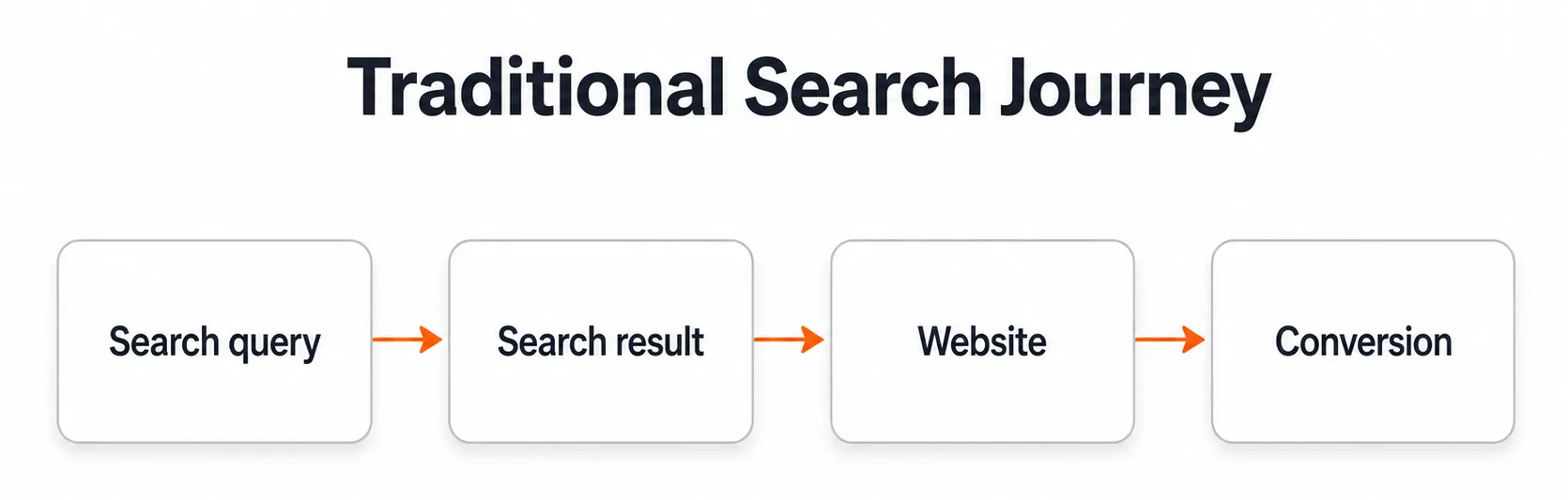 That journey still matters. SEO remains the foundation on which AEO and GEO are built.
What Is AEO?
Answer Engine Optimization (AEO) focuses on making content easy for search systems to identify and use as a direct answer. For example, instead of writing several paragraphs before defining a technical concept, an AEO-friendly article answers the question clearly and then adds context.
A useful structure is:
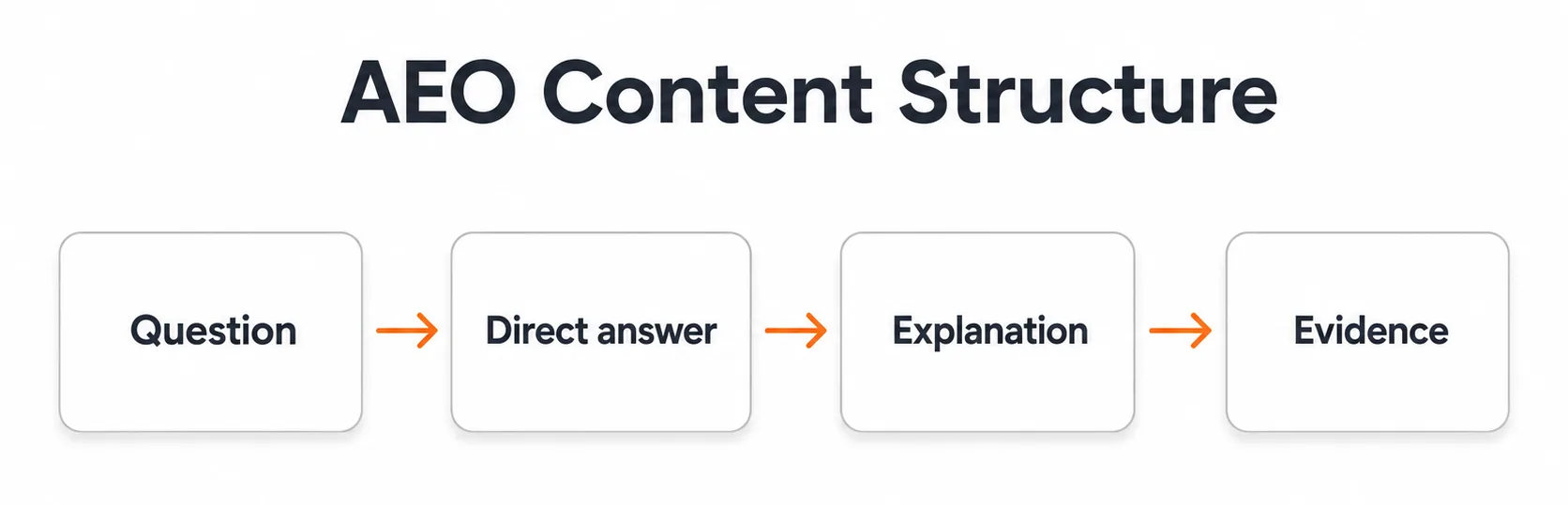 This works particularly well for definitions, FAQs, troubleshooting guides, comparisons, and technical processes. The goal is not to make content shorter. It is to make the important information easier to find and understand.
What Is GEO?
Generative Engine Optimization (GEO) focuses on improving how a company, product, or content appears inside AI-generated answers.
A traditional search engine may return ten ranked pages. A generative system can instead combine information from several sources and provide one synthesized response.
For example, someone might ask:
Which developer tools help diagnose production failures at the code level?
The AI system may mention several vendors, explain their differences, and cite supporting sources.
This means GEO is not only about ranking a webpage. It is also about whether an AI system can understand:
- What your product does
- Which category it belongs to
- Who it is for
- What problems it solves
- How it differs from alternatives
- Whether there is credible evidence supporting those claims
For developer brands, clear technical positioning matters more than vague marketing language.
What Is the Difference Between SEO, AEO, and GEO?
The table below shows how SEO, AEO, and GEO differ in their goals, optimization focus, expected outcomes, and measurement.
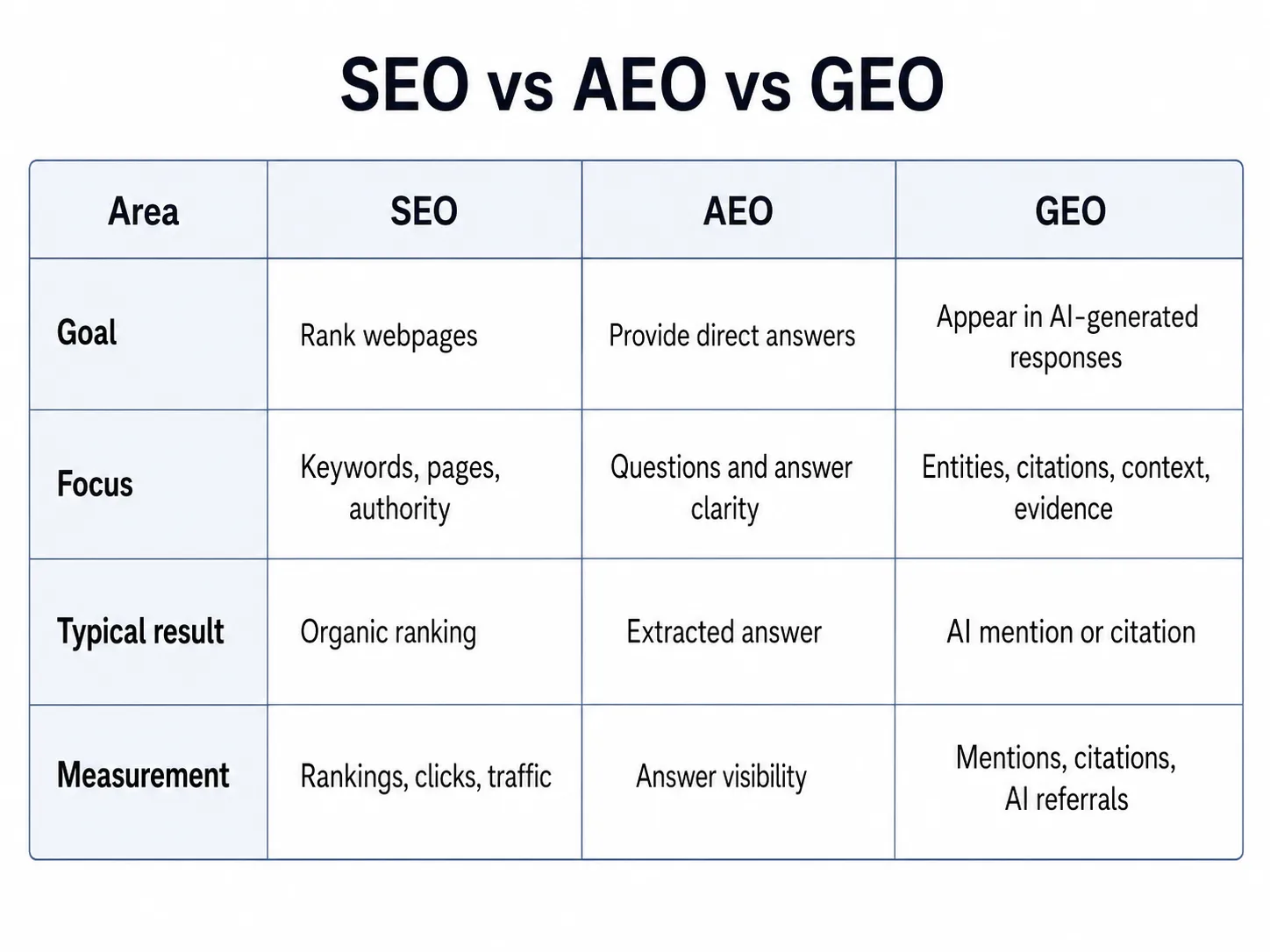 A simple way to separate them is the following:
SEO: Can search engines find and rank us?
AEO: Can they easily extract the right answer from us?
GEO: Can generative systems understand when our brand or content belongs in the answer?
These should not become three separate content strategies. A well-built technical article can support all three.
Does GEO Replace SEO?
GEO still depends heavily on the same fundamentals that make SEO work. If an important technical page is difficult to crawl, poorly structured, duplicated across several URLs, disconnected from the rest of the website, or unclear about the product it describes, generative search optimization will not fix the underlying problem.
The better sequence is:
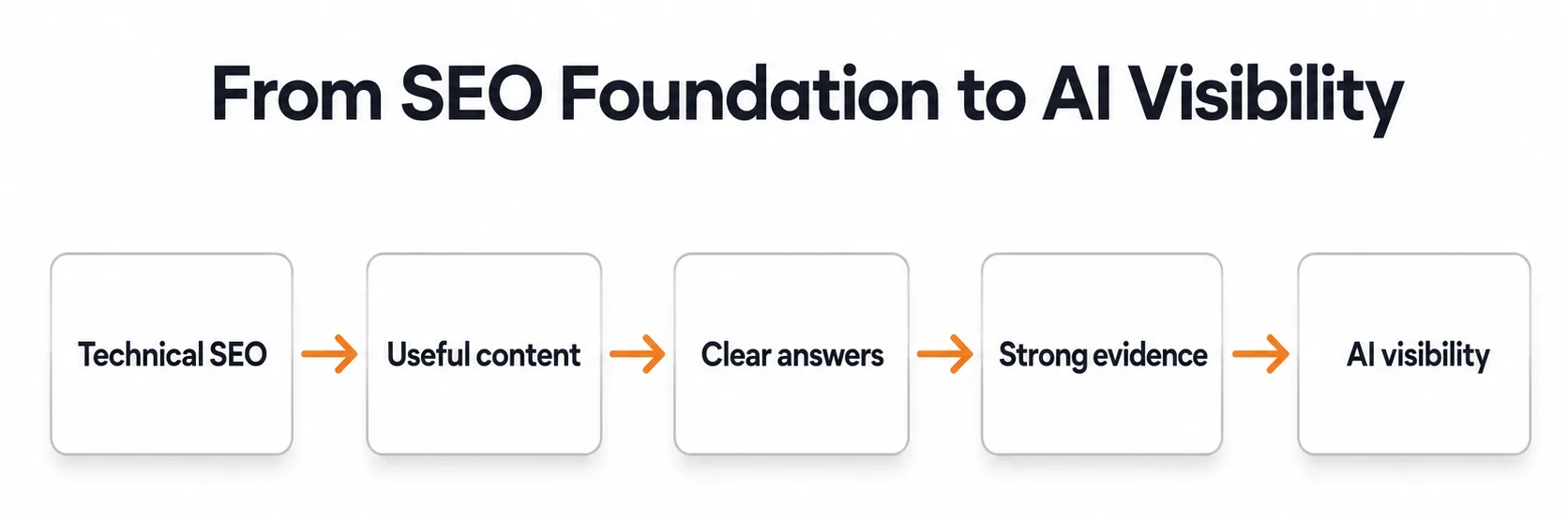 That is why we treat AI search optimization as an extension of search strategy rather than a replacement for traditional SEO.
What Does Strong AEO and GEO Content Look Like?
The biggest change is not keyword usage. It is information precision. Consider this product description:
Our AI-powered platform transforms engineering reliability.
It sounds polished but provides little technical context.
Compare it with:
The platform captures code-level runtime data so developers can identify which functions, requests, and dependencies are involved in production failures.
The second explanation establishes clear relationships between the product, capability, problem, and user. For developer-focused content, the same principle should apply across:
- Technical articles
- Documentation
- Product pages
- Comparisons
- Tutorials
- Integration guides
- Architecture explanations
- Original research
Strong GEO content also benefits from evidence. Benchmarks, technical examples, implementation details, original data, and expert analysis give AI systems and readers more substance than generic claims.
What Are the Main Generative Engine Optimization Challenges?
One of the biggest generative engine optimization challenges is that there is no single predictable AI ranking position. Different prompts can produce different sources, recommendations, and citations. Small changes in how a question is asked may also change which companies appear.
Other common challenges in implementing generative engine optimization include:
- Unstable AI citations
- Weak visibility into ranking and retrieval systems
- Poorly defined product categories
- Limited third-party brand authority
- Difficulty measuring AI influence on conversions
This makes GEO an ongoing optimization process rather than a one-time technical task.
How Can an AI Search Monitoring Platform Improve SEO Strategy?
The question “how can an AI search monitoring platform improve SEO strategy?” is becoming more relevant as search expands beyond traditional rankings. A conventional rank tracker tells you where a page appears for a keyword.
AI monitoring can help answer different questions:
- Is our brand mentioned for important buyer prompts?
- Which competitors appear instead?
- Which sources are cited?
- Which product attributes does AI associate with us?
- Which questions consistently exclude our brand?
That information can uncover content gaps that normal keyword tracking misses.
For example, a company might rank well for API monitoring software while rarely appearing when users ask AI systems “What tools can help debug production API latency?”
The problem may not be the keyword. It could be weaker technical content, unclear positioning, missing comparisons, insufficient documentation, or limited external authority. AI monitoring should therefore feed into the broader SEO and content strategy.
How Do You Track SEO Effectiveness in AI Search Engines?
Understanding how to track SEO effectiveness in AI search engines requires looking beyond rankings. A practical measurement model includes:
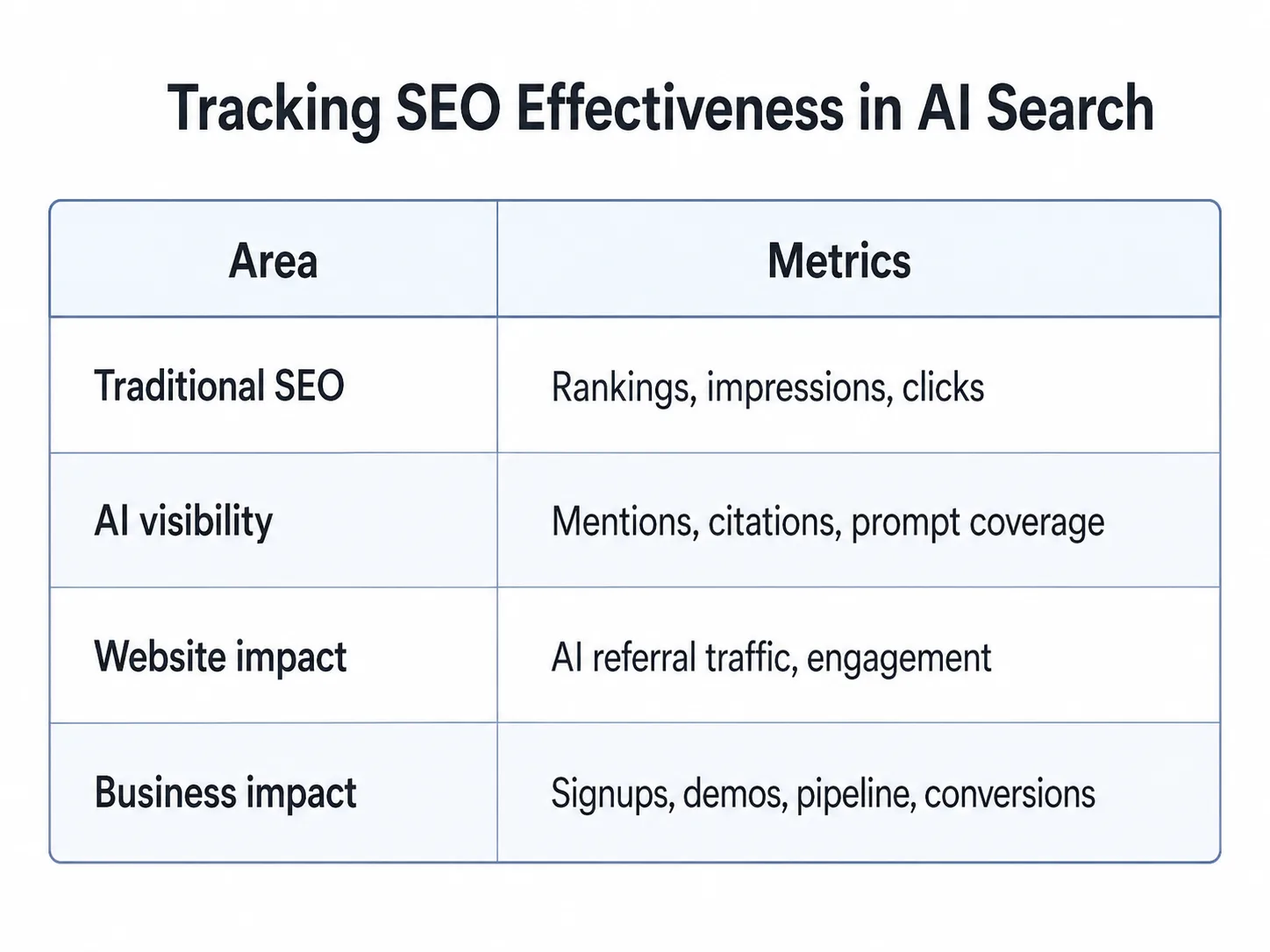 The objective is not simply to monitor SEO performance in AI search and report how many times a brand appeared. The useful question is whether that visibility helps the right audience discover, evaluate, and eventually choose the product.
Should SEO, AEO, and GEO Be Separate Strategies?
Usually, no. Creating one article for SEO, another for AEO, and another for GEO leads to duplicated content and unnecessary complexity. A stronger editorial process asks three questions:
- Can search engines access and understand this page?
- Does it clearly answer the user's real question?
- Does it contain enough context and evidence to be useful inside a generated answer?
That produces content designed for modern search without sacrificing the reader. Even something as simple as writing a clearer opening paragraph can help.
Final Thoughts
SEO, AEO, and GEO are different layers of the same discovery system. SEO builds discoverability. AEO makes information easier to answer with. GEO extends that visibility into generative search, where brands compete for citations, mentions, and recommendations.
For developer tools and technical B2B companies, the right response is not to abandon SEO for the latest acronym. Build technically accessible pages, publish expert content, answer real questions clearly, support claims with evidence, and measure visibility across both traditional and AI-driven search. The search interface is changing. The need for useful, technically credible information is not.