Developer marketing is a focused marketing approach used to reach software developers, engineers, technical founders, DevOps teams, and other technical decision-makers.
Unlike general B2B marketing, developer marketing does not work well when it only pushes product claims. Developers often need proof. They also want helpful examples and clear documentation. They look for real use cases and honest technical details before they trust a company.
In 2026, developer marketing has become more important because developers are no longer just users. They influence tool selection, software architecture, API adoption, cloud decisions, and even long-term vendor choices.
What Is Developer Marketing in 2026?
Developer marketing is the process of helping developers discover, understand, test, and trust a technical product or service. It is commonly used by software companies, SaaS platforms, API providers, cloud vendors, cybersecurity companies, DevOps tools, AI platforms, and software development companies.
The goal is not only to create awareness. The real goal is to reduce friction between a developer’s problem and the solution your company offers.
Good developer marketing usually includes:
-
Technical blog articles
-
Documentation
-
Tutorials
-
Developer newsletters
-
Community content
-
Product comparison pages
-
Use-case landing pages
Developers often learn through documentation, examples, and hands-on testing. Stack Overflow’s 2025 Developer Survey found that technical documentation was one of the most used learning resources among developers. That is why developer marketing should feel useful before it feels promotional.
Why Is Developer Marketing Important?
Developer marketing is important because technical buyers do not make decisions the same way as general business buyers. A business buyer may respond to benefits, pricing, case studies, and brand reputation. A developer usually wants to know whether the product actually works, whether it fits the existing stack, and whether it will create problems later.
This makes trust a major part of developer marketing.
A developer may ask:
-
Is the documentation clear?
-
Does the API behave as expected?
-
Are there real examples?
-
Does this solve my actual problem?
In 2026, this matters even more because AI tools are changing how developers search, compare, and build. Stack Overflow reported that 84% of survey respondents were using or planning to use AI tools in their development process, while 51% of professional developers used AI tools daily.
This means your content may not only be read by humans. It may also be summarized, compared, or used by AI tools during the research process.
How Does Developer Marketing Impact Business Growth?
Developer marketing supports growth by helping technical audiences move from awareness to adoption. For software companies, the impact can show up in several ways:
-
More qualified website traffic
-
Better product understanding
-
Stronger developer trust
-
Better sales conversations
-
More community engagement
-
More organic brand mentions
The biggest impact is often seen before a sales call happens.
When developers already understand your product, use case, setup process, and technical value, the sales conversation becomes more focused. The company does not need to explain everything from zero. Developer marketing also supports SEO. When your website answers real developer questions clearly, search engines and AI search tools can better understand what your company does.
Google’s guidance still emphasizes helpful, reliable, people-first content instead of content created only to manipulate rankings.
How to Market to Developers?
To market to software developers, companies need to lead with usefulness. Developers are usually skeptical of vague claims like “easy to use,” “powerful,” or “next-generation.” They prefer practical proof.
A stronger developer marketing approach includes:
-
Explain the technical problem clearly.
-
Show how the solution works.
-
Use real examples.
-
Avoid overpromising.
-
Include code samples where relevant.
The tone should be direct and factual. For example, instead of saying:
“Our platform transforms developer productivity.”
Say:
“Our platform helps developers identify runtime issues faster by showing where the error happened, what changed, and which code path was affected.”
The second version is more specific. It gives the developer something to evaluate.
What Type of Content Works Best for Developers?
The strongest developer marketing content usually answers a real technical question.
Useful formats include how-to tutorials that guide developers step by step, comparison articles that help them evaluate different tools or approaches, and architecture guides that explain how systems are structured. Troubleshooting guides are valuable for solving specific issues, while migration guides help teams transition from one solution to another. API walkthroughs provide clarity on how to use a product’s functionality, and security explainers break down important safety considerations.
Performance guides help optimize systems, developer onboarding content supports new users in getting started, and FAQ pages address common questions in a clear and accessible way. Content should not only explain the product. It should help the reader understand the problem better.
That is where developer marketing becomes more valuable than normal product promotion.
What Makes Developer Marketing Different from Traditional Marketing?
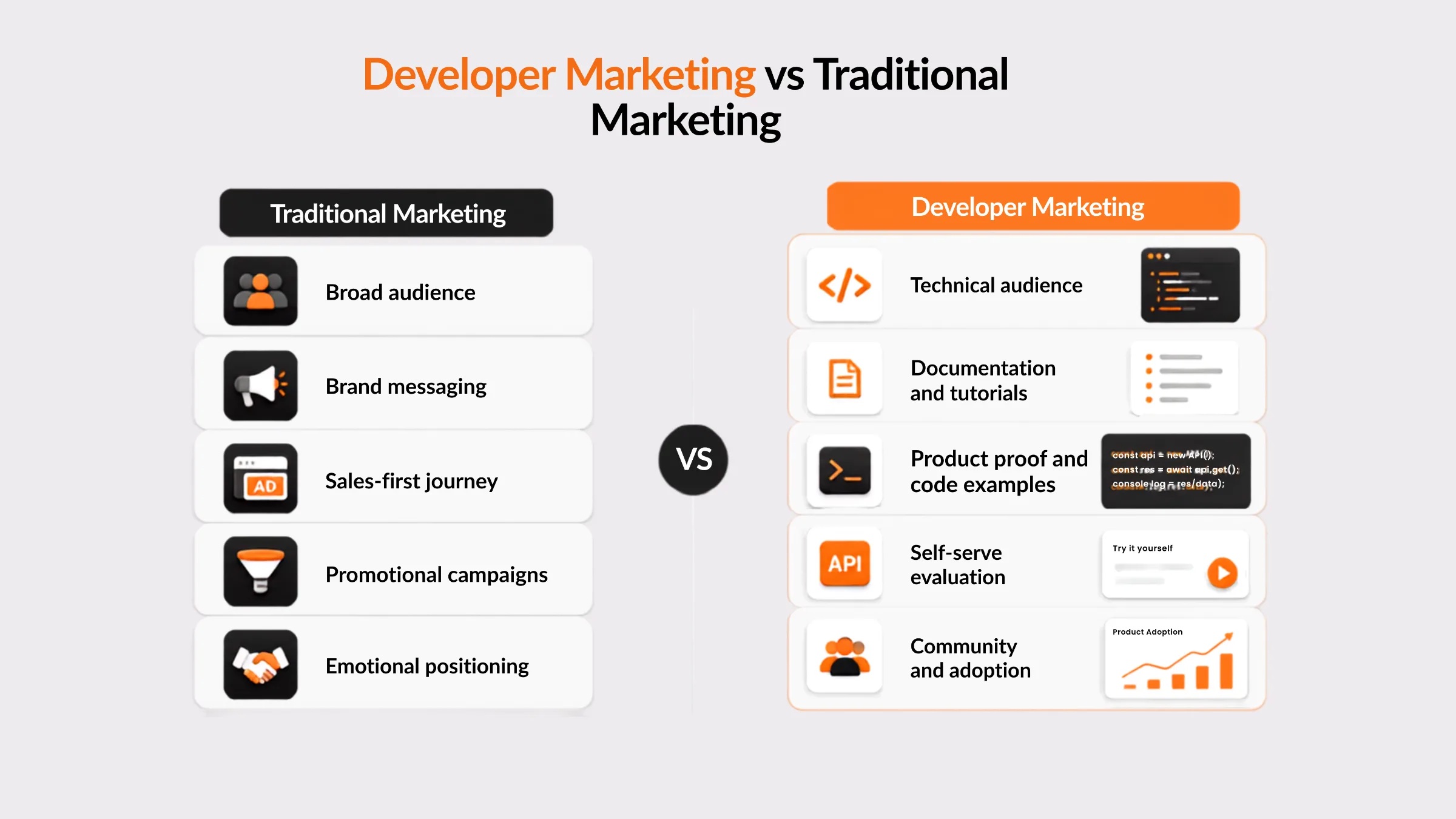 Developer marketing is different because the audience is more technical, more skeptical, and more hands-on. Traditional marketing often focuses on emotional appeal, simple benefits, and broad positioning. Developer marketing needs more depth.
Developers usually want to see:
This does not mean developer marketing should be complex. The best developer marketing is clear, specific, and useful. It explains technical ideas in a way that respects the reader’s knowledge without making the content harder than necessary.
Why Developer Marketing Matters More in 2026
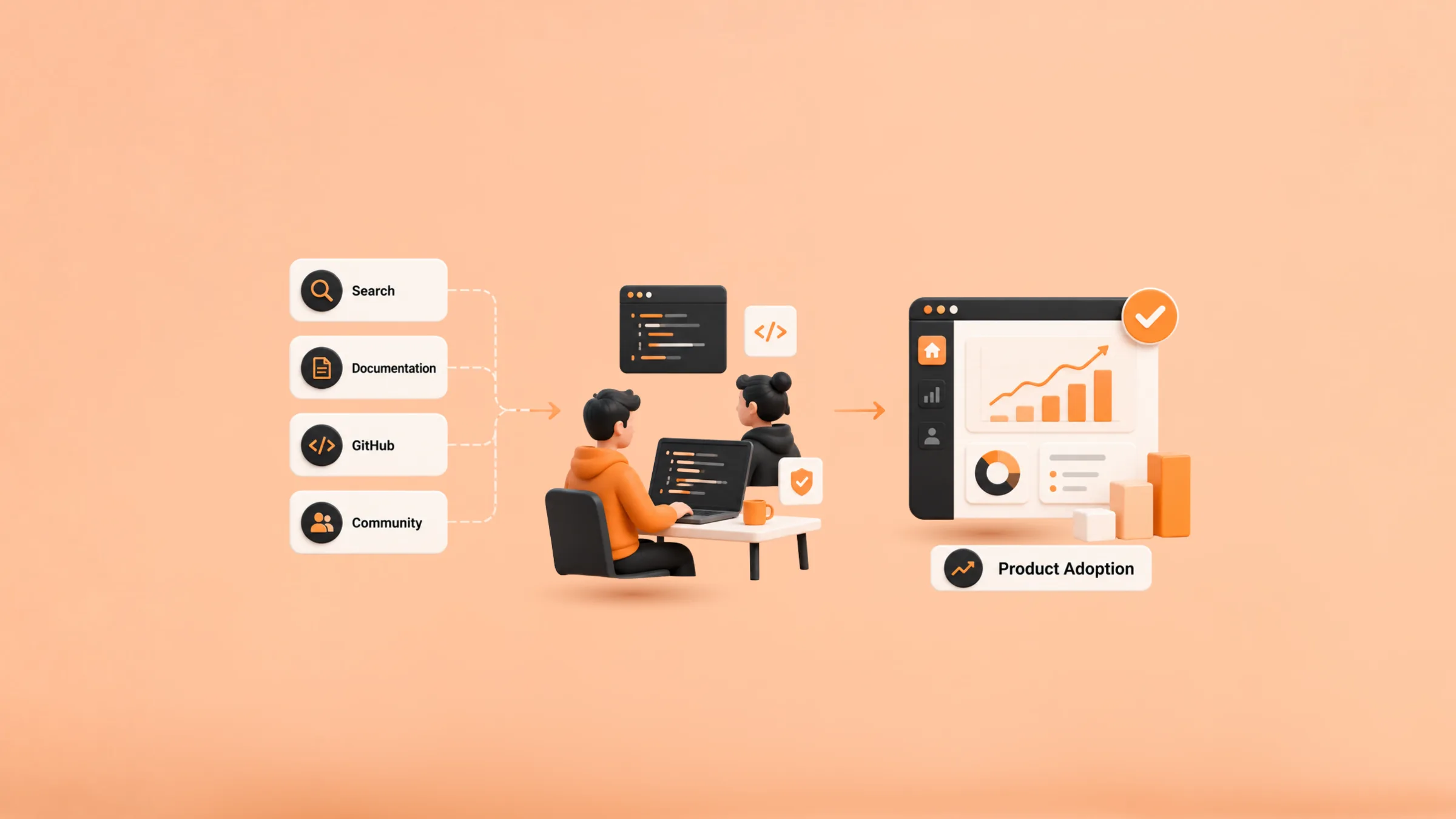
Developer marketing matters more in 2026 because software buying is more technical, more research-driven, and more influenced by AI-assisted discovery. Developers now use search engines, documentation, AI tools, GitHub, Reddit, YouTube, newsletters, and community spaces to evaluate products. GitHub’s Octoverse 2025 report said more than 180 million developers were building on GitHub, showing how large and active the global developer ecosystem has become.
This makes visibility harder.
A company cannot rely only on ads or sales outreach. It needs useful content that appears when developers are actively looking for answers. Strong developer marketing helps a company become part of that research process.
Conclusion: Why Developer Marketing Should Be a Priority
Developer marketing is important because developers play a major role in how software products are discovered, tested, trusted, and adopted.
In 2026, companies need to explain their technical value clearly, not just promote features. Good developer marketing helps build trust through useful content, documentation, examples, and honest technical education. It also supports SEO, product adoption, and better sales conversations. For software companies, developer marketing is no longer optional if technical audiences are part of the buying journey.
 Enlear