Creating content that speaks to developers requires more than clever headlines or SEO tricks. Developers value three things: authenticity, depth, and practical advice. The best way to deliver this? Work closely with subject-matter experts (SMEs), the engineers who build, fix, and scale the tech your product supports.
This guide walks you through how to collaborate with SMEs throughout your content process from ideation to publication.
 ## Why SMEs are Critical to Developer Content
Developers can tell when content isn’t written by someone with real experience. For instance, imagine an article on “Deploying a Node.js App to the Cloud” that forgets to mention how to manage .env files. To a developer, that’s like a recipe missing the main ingredient. They’ll lose trust and stop reading.
Most content writers aren’t full-time developers. That’s okay, but it also means they may not catch the small technical details that matter. Without SME input, developer content often ends up sounding too generic.
Why Developer Content Needs Real Experience
Can developers tell when content isn’t written by someone who’s used the technology?
Absolutely, and usually within seconds. Have you ever seen an article with vague examples or code that doesn’t run? Developers have too, and when they do, they stop reading. Trust fades quickly when content doesn’t reflect real experience.
That’s why working with subject-matter experts (SMEs) is so important. As a marketer, you don’t need to have deployed Kubernetes or fine-tuned a complex database query yourself, and that’s completely fine. But without insights from someone who has, even a well-crafted article can fall short of what technical audiences expect.
Want your content to feel real, helpful, and credible? Start by partnering with the people who’ve lived the problem. Developers can tell the difference.
Three Story Types That Win
Different types of developer content serve different goals. Choosing the right format helps your message land with more clarity and impact. Here are three formats developers trust and value:
Tutorial
A step-by-step guide that helps developers accomplish a specific task. Think of it like a recipe, it includes every command, code snippet, and expected output so the reader can follow along without getting stuck.
Deep Dive
A detailed explanation of a technical decision or change. It typically covers:
- What tool or approach was chosen
- Why was it selected
- What improved, and what challenges came up
- The trade-offs and key lessons learned
Deep dives are especially useful for topics like system migrations, architectural changes, or tool evaluations.
Failure Report
An honest account of something that went wrong and how it was fixed. It usually includes:
- What the issue was
- Why it happened
- How it was resolved
- What steps were taken to prevent it from happening again
Developers value this format because it’s grounded in real experience and often highlights hard-earned lessons.
Each of these formats helps showcase real-world insight, and that’s what makes developer content credible and useful. Let me know if you’d like a content brief template to help you plan around these structures.
Collaborating on Keyword Planning with Developers
A Collaborative Workflow

Start by pulling a draft list of keywords using tools like Semrush or Google Search Console. This gives you a starting point, but it’s just the first step.
Bring in a developer or subject-matter expert to review the list. They can mark which keywords reflect real technical pain points, which ones miss the mark, and which need more clarity or focus.
Then, look at real questions developers are asking in Slack, GitHub, or support chats. Group similar ones together. For example, if you see multiple questions about how to manage environment variables, update CI/CD pipelines, or troubleshoot deployment errors, you could group them under “DevOps deployment issues.”
Finally, prioritize those groups based on two things: how valuable the topic is to the business and how much SME time it will take to cover. This process helps you build a keyword list that’s relevant, focused, and backed by real developer needs.
Treat Your Editorial Calendar Like a Shared Project
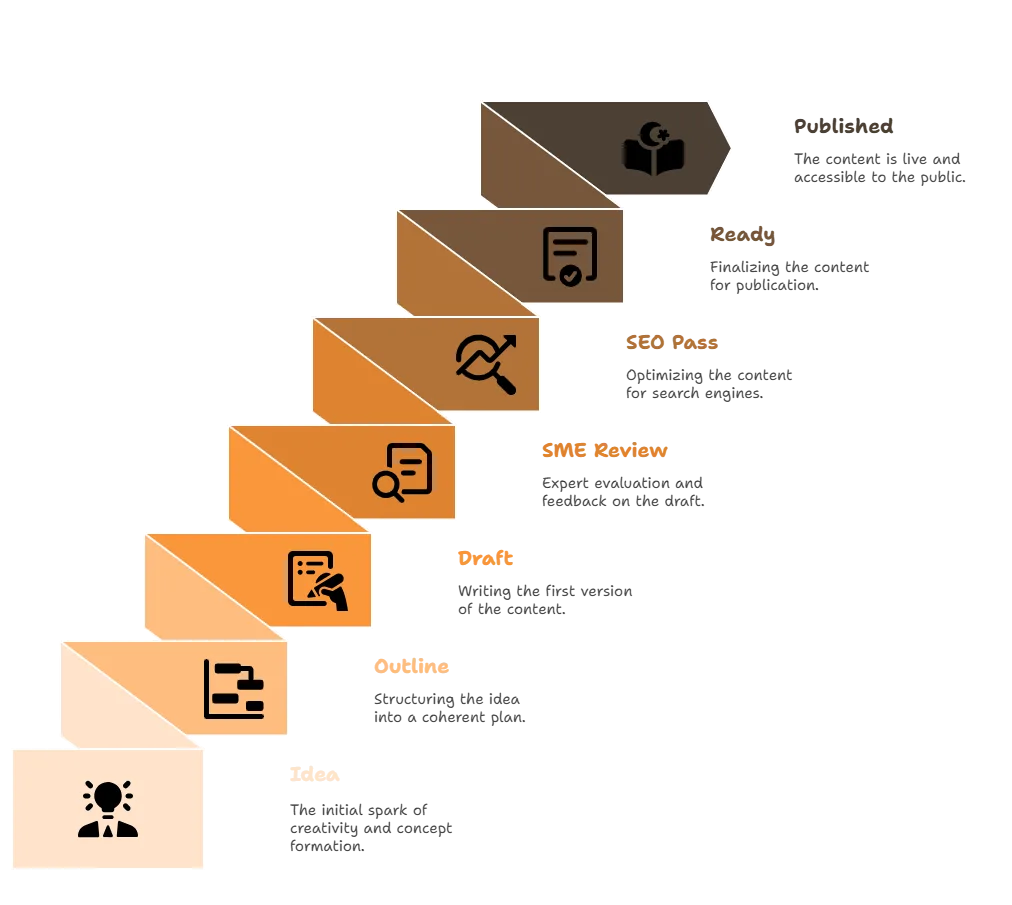 Think of your content calendar the same way developers treat code: repeatable, transparent, and easy for the whole team to collaborate on.
Make sure marketing, SEO, and engineering are aligned from the start. Try to connect each article to an upcoming product release whenever possible. Assign one subject-matter expert (SME) to lead the piece, and another to review it.
Plan by listing what the article will need, like code snippets, performance benchmarks, or simple diagrams, so they’re ready before writing begins. And always leave room for delays: a 30% buffer between draft and publish helps account for reviews, time off, or last-minute changes.
Why Outlines Matter and Who Should Own Them
Start with an outline before writing anything. It doesn’t need to be long, just clear about what the article will cover, who it’s for, and what the reader should take away.
For example, if the topic is “Fixing slow database cleanup in Postgres,” and the target audience is a mid-level database admin dealing with performance issues, your outline might include:
- A quick explanation of what Postgres cleanup (vacuuming) does and why it matters
- How to identify when cleanup is running slowly, using built-in monitoring tools
- Common causes of slowness, like table bloat or poor configuration
- Key settings to review and adjust
- A checklist to confirm improvements
- Simple visuals, like log snapshots or before-and-after graphs
A good outline also keeps everyone on the same page. Ideally, you create it together with the SME during a project retrospective, team sync, or even a casual chat. If that’s not possible, marketing can draft the outline and have the SME review it. Or the SME can sketch a rough version, and an editor can clean it up.
One important rule: don’t start writing until the outline is approved. It saves time, prevents rework, and helps everyone stay aligned from the beginning.
Finding the Right SME Fit
Great developer content starts with someone who’s been there, someone who’s solved the problem firsthand. That’s why it’s important to match each topic with a subject-matter expert (SME) who has real, relevant experience.
Look for engineers who’ve tackled similar issues in their day-to-day work. For example, a backend developer who optimized API response times under high traffic, a mobile engineer who reduced battery drain in a live app, or a platform engineer who automated scaling for a high-volume Kafka pipeline. These stories feel credible because they come from real problem-solving, not guesswork.
"Think about your team for a moment: who’s solved something recently that others in the community would benefit from hearing about?"
You can find these experts in many places on call channels, internal demos, retrospectives, or even in your contributor community. To encourage their involvement, offer something valuable in return: public recognition, compensation, or early access to something they care about.
Make Writing Easier for Developers
Most developers aren’t professional writers, and that’s okay. They’re often short on time, juggling multiple tools, and each has their writing style. That’s why it’s important to simplify the process and support them where it matters.
Start by setting flexible deadlines. Pair each contributor with an editor who can help shape the draft without changing the voice. Keep the workflow simple, use Markdown, review content through pull requests, and share a short, clear style guide so others can easily give feedback.
A few helpful tools:
- Grammarly Premium: for quick grammar and clarity fixes
- ChatGPT: to improve outlines or tighten up explanations
- Code playgrounds: to test and confirm code examples before publishing
One note of caution: avoid using AI to write full articles. Real-world experience shows in the writing, and developers trust content that comes from someone who’s done the work. SME-written always beats AI-generated.
Give Experts a Clear Starting Point
Before your SME begins writing, set them up with the essentials. Share a short outline, the main keyword, and a quick note on who the article is for. Add a helpful sample post, a basic code template, and a simple SEO checklist. These small steps remove early roadblocks and make it easier for them to focus on what they do best, sharing their experience.
As they draft, offer a few gentle prompts to help them self-edit: “Would a senior developer question this?”, “Is there a simpler way to say this?”, or “Would a diagram make this clearer?” These quick checks help the expert shape a strong draft, even without a full-time editor.
Work with Guest Writers to Build Credibility and Reach
Bringing in guest contributors can help your content feel more authentic and reach new developer audiences. You can find strong candidates on platforms like LinkedIn, Twitter (via tech hashtags), writing-focused Slack or Discord groups, and speaker lists from developer events.
When reaching out, be clear about the topic, word count, and payment. Make the process smooth by sharing a short agreement that covers deadlines and publishing rights. Provide them with your style guide, access to your CMS or publishing tool, and a writing template to get started.
Once they submit a draft, aim to return edits within four business days. When you publish, tag them and promote the post. If it performs well, invite them back. Building a long-term relationship is often easier and more effective than finding someone new each time.
Not sure where to start?
Think about the last speaker or contributor you saw who explained something clearly and with real-world context.
Could they be your next guest writer?
Reach out, you might be surprised how many are open to sharing.
Build a Contributor Hub That Makes Participation Easy
Create a central “Contributor Hub” where guest writers can find everything they need to contribute smoothly. Include open publishing slots, your style guide, writing templates, and a simple payment form. You can build this in-house or use tools like WriterGate to manage contributors, track assignments, and streamline communication.
To keep writers engaged, share basic post-performance stats, such as views, clicks, or backlinks, after publishing. And make your rewards structure clear:
- Bronze: swag, a backlink, and a public contributor profile
- Silver: includes payment and early access to new product features or betas
- Gold: adds perks like conference passes, co-branded content, or revenue share
A well-organized hub not only helps you attract high-quality contributors, but it also makes it easier for them to come back and write again. Let me know if you'd like a checklist or tool comparison for setting one up.
Extend Your Reach Beyond Your Blog
Your blog is your home base, but sharing posts elsewhere helps you reach new readers. Choose evergreen topics and use platforms that let you link back to your site for SEO.
- On Medium (Better Programming), republish the full post with a canonical link.
- On Dev. to, share a teaser that points to the full article.
- HackerNoon likes “how we fixed it” stories.
- Smashing Magazine prefers detailed tutorials.
If you co-write with a partner or guest, plan the launch: post on social, share a launch thread, and consider a live Q&A.
Build a Developer-Centric Content Pipeline
Developers don’t want fluff; they want clear, direct answers to real problems. Start with keywords based on real issues, sourced from engineers who’ve worked through them. Use short outlines to keep each post focused and relevant.
Stick to simple, consistent editing practices. Bring in guest contributors and share content on trusted platforms that link back to your blog. Expert-led content isn’t a shortcut, it’s your foundation.
When you build around real developer knowledge, your blog becomes a go-to resource that engineers trust.
Action Plan Checklist
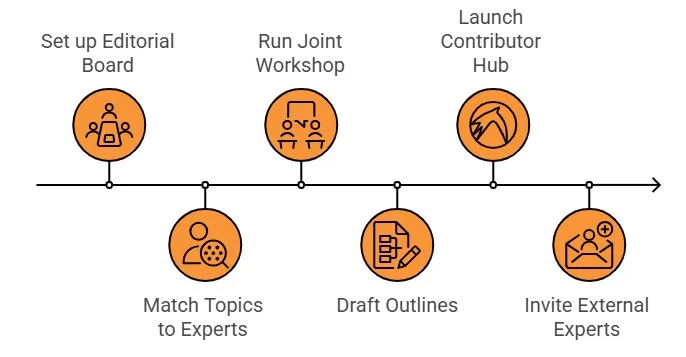
Set up one shared editorial board. Match each Q3 topic with the right expert. Hold a workshop so marketing and engineers can pick search terms that fit user needs.
Write three short outlines and get each expert to approve. Launch a contributor hub with clear guides and ready-to-use templates. Find two outside experts and email them an invite. When developers teach developers, readers trust the content.